Keynote 1:
Wednesday, September 23, 2026, 09:05 – 09:25 a.m.
Professor I.S. Jawahir – University of Kentucky, Lexington, KY, USA
Title: Circular Products, Processes and Systems for Transformative Next Generation Sustainable Manufacturing
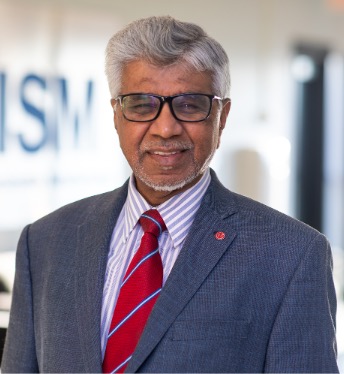
James F. Hardymon Endowed Chair in Manufacturing Systems, University of Kentucky
Abstract:
Sustainable manufacturing, which offers significant environmental, economic and societal benefits, has in recent times emerged globally as a truly transformative and value adding technological platform for accelerated growth and economic development. Closed-loop circular manufacturing which serves as the driver and precursor to sustainable manufacturing, represents three interconnected integral elements of manufacturing: products, processes and systems. This presentation will focus on recently established product circularity principles and the uniquely novel circular manufacturing processes to demonstrate their transformative impact on next generation sustainable manufacturing systems. New opportunities and benefits for implementing a metrics-based product circularity evaluation methodology for concurrent product-process design will be presented. A key aspect of this presentation will be the recent emphasis on developing standards and toolkits for circular product design by various organizations such as ISO, ASTM, EN, UL, etc.
A hierarchical approach involving a comprehensive analysis of the entire manufacturing value chain at component, sub-assembly, assembly and system levels developed from the basis of product and process circularity considerations will be shown in this presentation with applications of product circularity principles for consumer products and industrial systems.
A value proposition for circular manufacturing systems involving four product life-cycle stages (pre-manufacturing, manufacturing, use and post-use) will be discussed with a brief introduction of recently emerged novel production technologies for upcycling of end-of-life products for greater value creation. Case studies demonstrating upcycling methods will be presented for sustainable value creation throughout the entire life-cycle, showing new opportunities for industrial symbiosis and implementation strategies.
The importance of stakeholder (manufacturer, user and society-at-large) expectations for economic growth and societal wellbeing, and the associated technological challenges involved in meeting their needs through education and training at all levels (high school, undergraduate, graduate and industry levels) will also be presented.
Keynote 2:
Wednesday, September 23, 2026, 09:25 – 09:45 a.m.
Marcello Colledani – Politecnico di Milano, Italy
Full Professor, Mechanical Engineering Department, Politecnico di Milano
Abstract:
To Be Announced (TBA)
Keynote 3:
Thursday, September 24, 2026, 08:30 – 08:50 a.m.
Eng. V. R. Sena Peiris – National Expert Committee on Climate Change Mitigation, Sri Lanka
Title: Enhancing Wealth and Reaching Sustainability through Cleaner Production and Circular Economy
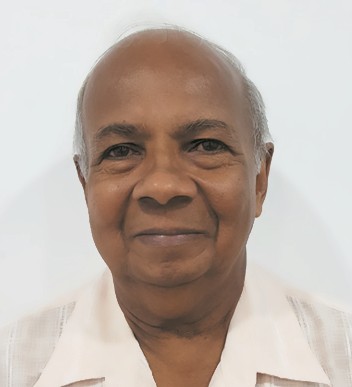
Chair, National Expert Committee on Climate Change Mitigation in Sri Lanka
Abstract:
The global eco systems are damaged causing escalating pollution while a large portion of the global population in impoverished causing illness and death from hunger in the midst of innovative technological advancement. The central cause for both these global problems is the wasteful use of resources at every stage of human life. The business and industry sector contribute heavily to resource wastage along the entire life cycle of the products leading to pollution and eco system damage leading to fortunes ending up in the drain. Many developed countries have embraced circular economy as the lasting solution for optimization of resource productivity in product manufacturing and services but developing countries are still struggling to manage their waste dumps.
Though circular economy suggests many strategies very little attempt is made to eliminate waste at the point of generation. Cleaner Production approach suggests wastes are resources in a wrong place or wrong form and suggests we should attempt to eliminate waste at the point of generation. Cleaner Production can be used for tracking of wastes generation along a manufacturing process or in a service delivery or can be extended to track waste generation along a life cycle of a product. The three key strategies reduction of waste at source, recovery of resources from wastes and product modification can be expanded in a set of floor level techniques for waste elimination. Extending these strategies can be used to decouple resource use from economic wellbeing and environmental degradation through reduction of resource intensity of products, recovery of resources, redesigning products through eco design and enabling smart consumption by the users. Cleaner Production can be considered as the foundation of Circular Economy as both concepts lead to circular material flows where Cleaner Production facilitates industrial enterprises to approach zero waste generation while Circular Economy strategies can generate economic value for post-consumer wastes by creating many industrial opportunities through Industrial Symbiosis and Eco innovation. Globally many examples showcase how Cleaner Production and Circular Economy can transform human wasteful culture to a wasteless culture.
Key Words: Cleaner Production, Circular economy, Decouple, Industrial Symbiosis, Eco Innovation
Keynote 4:
Thursday, September 24, 2026, 08:50 – 09:10 a.m.
To Be Announced (TBA)
Keynote 5:
Friday, September 25, 2026, 08:30 – 08:50 a.m.
Professor Wahidul Biswas – Curtin University, Australia
Title: Circular Manufacturing: Reshaping Global Production and Resource Use
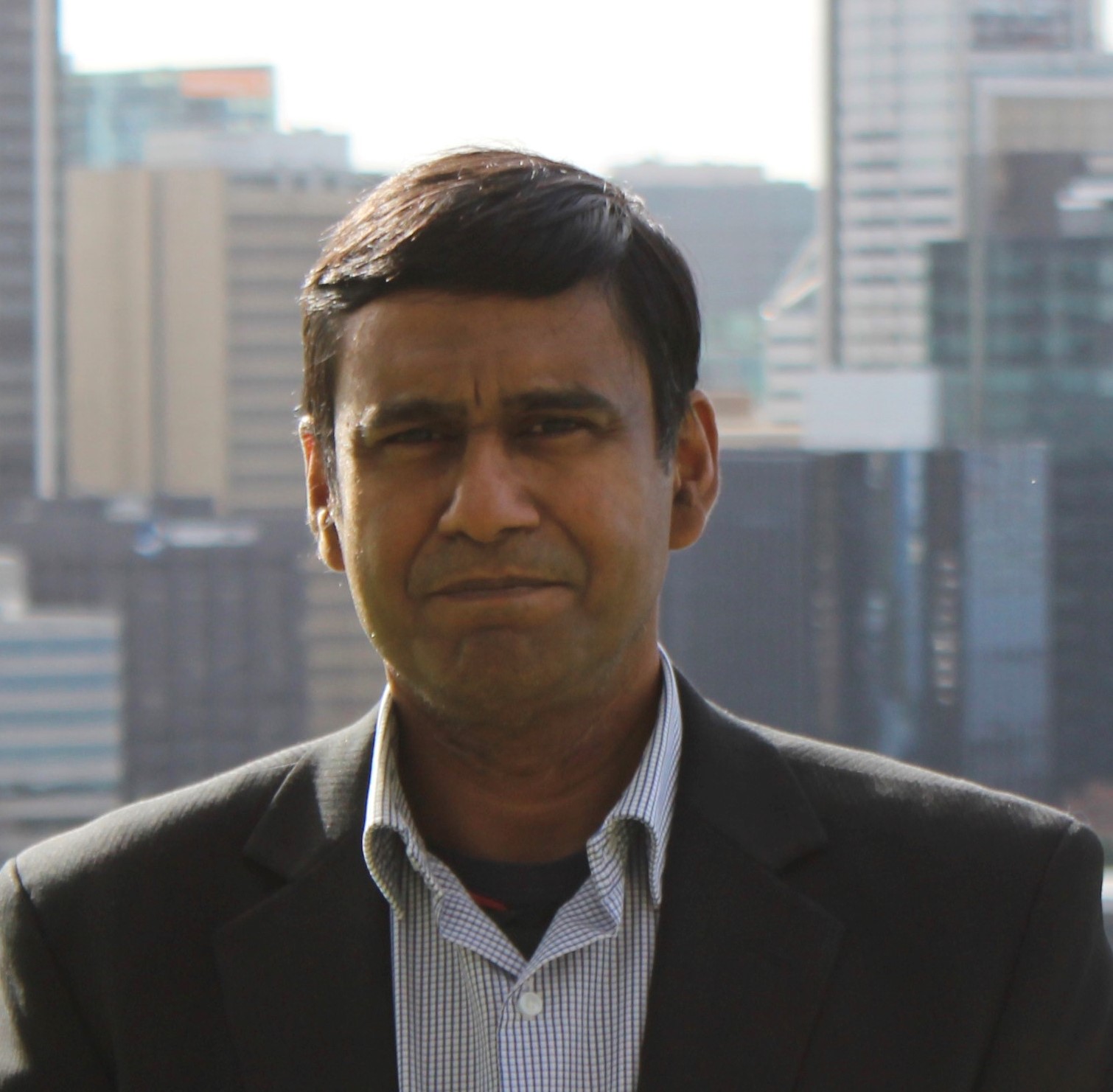
Deputy Director, Sustainable Engineering Group, School of Civil and Mechanical Engineering, Curtin University
Abstract:
There is only one planet earth, but we are now consuming resources 1.8 times faster than the earth can regenerate. As we approach the 21st century, the earth will neither have enough natural resources to sustain population growth nor to manufacture devices indispensable for reducing greenhouse gases to achieve a net-zero emission target. Our economy now is mostly ‘linear’, with the traditional “Take-Make-Use-Dispose” functions. The Global Circularity Gap Report 2026 report explored that the circular gap is still 93%, meaning that a significant portion of the materials that are used to make products to meet the societal demand are raw/virgin materials, and then after use they are thrown away without taking account the recovery of these finite and rapidly depleting resources into product design and manufacturing processes. Circular manufacturing is one of the main pathways to reduce the circular gap as it ensures the manufacture of products of high quality, durability, modular, and performance with improved or enhanced functionality using energy-efficient, non-toxic, low hazard, safe, secure, and affordable technologies and manufacturing methods, and recycled materials, making optimal use of resources and energy and producing minimal wastes and emissions, and providing maximum recovery, recyclability, reusability, remanufacturability, with redesign features, all aimed at enhanced resource efficiency and intergenerational social equity.
Keynote 6:
Friday, September 25, 2026, 08:50 – 09:10 a.m.
Marwan Khraisheh – Hamad Bin Khalifa University, Doha, Qatar
Title: From End-of-Life to Next Life: Sustainable Manufacturing and Circular Reuse of Thin Film Composite Membranes for Water Security
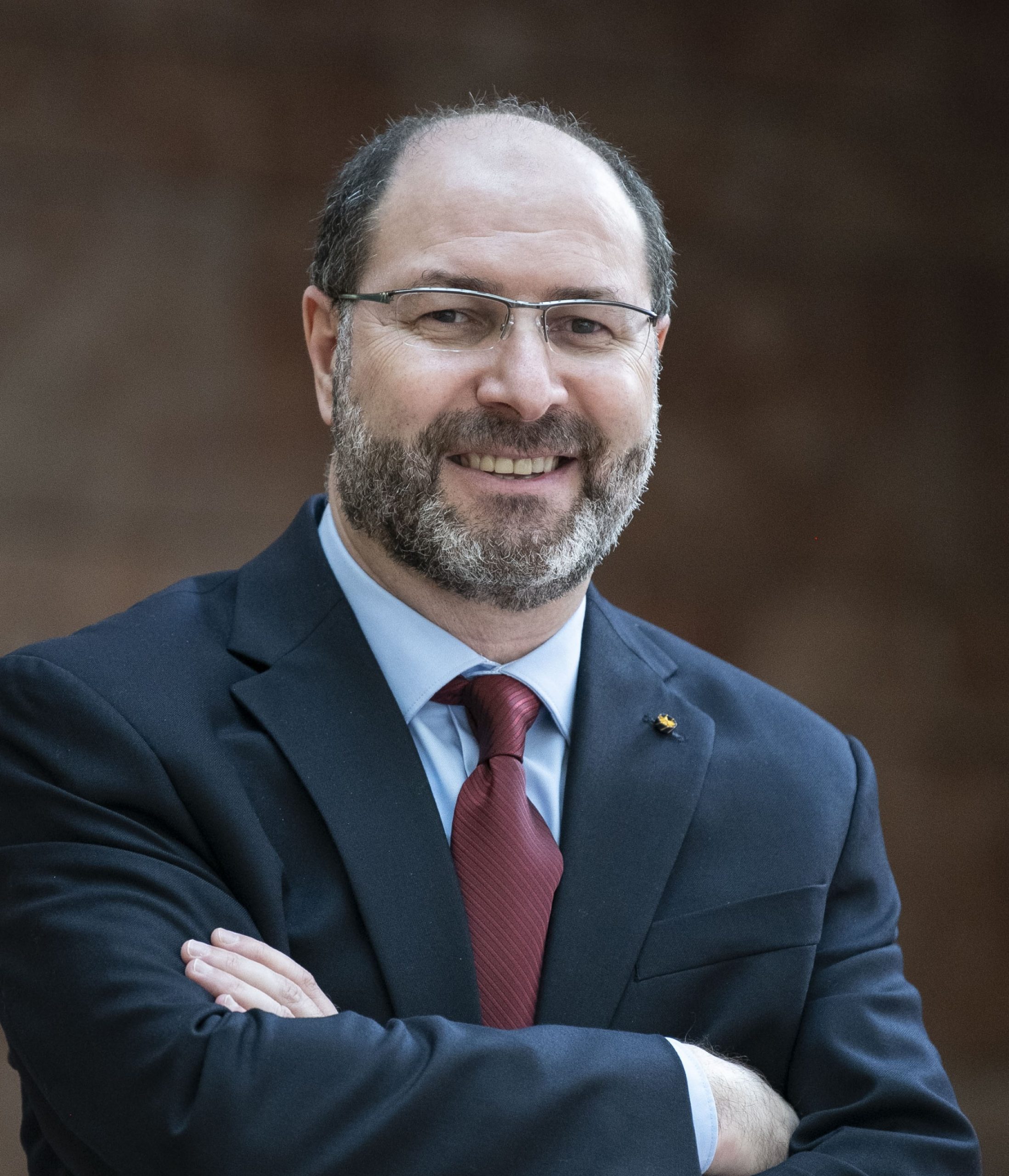
Professor and Head, Division of Mechanical and Industrial Engineering, College of Science and Engineering, Hamad Bin Khalifa University
Abstract:
Access to clean water is becoming an increasingly critical global challenge due to population growth, urbanization, industrialization, pollution, and the depletion of conventional freshwater resources. In this context, desalination has become a strategic pillar of water security, with reverse osmosis (RO) emerging as the leading technology because of its high efficiency, modularity, scalability, and comparatively lower energy demand, making it the dominant technology in modern desalination practice.
Yet the success of RO has created a parallel sustainability challenge that has received far less attention: the growing accumulation of end-of-life (EoL) membrane modules. By 2025, global EoL generation is projected to exceed 2 million modules per year, corresponding to more than 33,000 tons of polymer-rich waste. Current EoL practices remain largely rooted in disposal or resource-destructive treatments, resulting in the loss of embedded material value, additional environmental burdens, and are inconsistent with the principles of circular economy and sustainable manufacturing.
The talk emphasizes the perspective that RO membrane modules should no longer be regarded as disposable consumables, but rather as recoverable and remanufacturable products within a circular system. It argues for a transition from replacement-based thinking toward lifecycle extension strategies centered on product recovery, reuse, and sustainable remanufacturing. Within this framework, membrane modules are viewed as high-value engineered products whose structural integrity and residual functionality can be retained and redirected into subsequent service lives.